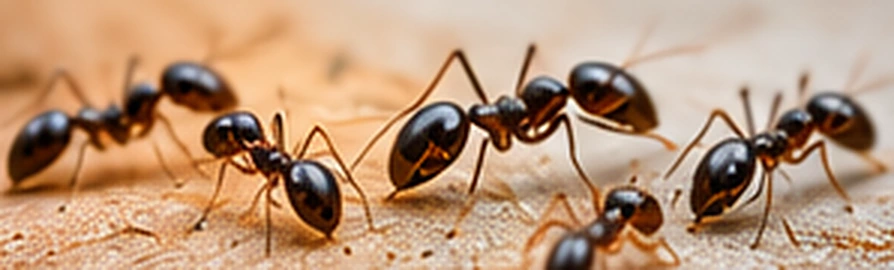
It starts with a few ants on the kitchen counter. You wipe them up, spray the trail, and feel pretty good about it. Then they are back the next morning, and somehow there are more. If that sounds familiar, you have run into the central fact of ant control: the ants you see are only a small part of the colony.
Stopping ants for good means dealing with the colony, not just the foragers. Here is how that works, what you can do on your own, and when it makes sense to call for help.
The Short Answer
To stop ants from coming inside, find where they are entering and what they are after, remove or close off those things, and use baits so that workers carry the treatment back to the colony. To eliminate the colony, you generally need to be patient with bait, avoid spraying the ants you see, and, if the nest is outdoors, locate and treat it carefully. Persistent problems, large colonies, or ants nesting inside walls are good reasons to bring in a professional.
Ants are tough to eliminate completely, especially since outdoor colonies can send foragers back again. The realistic goal is to get the indoor problem under control and make your home an unattractive place to return to.
Know Which Ants You Have
University of Kentucky Extension lists several ants that commonly invade Kentucky homes: pavement ants, carpenter ants, acrobat ants, pharaoh ants, and odorous house ants. The odorous house ant has become the most common and hardest to control.
- Odorous house ants are small, about 1/8 inch, and blackish. When crushed, they give off a smell often compared with rotten coconut. They nest indoors in wall voids, appliances, and potted plants, especially near moisture, and outdoors under mulch, stones, and similar cover.
- Pavement ants are small and brown-black with obvious nodes, or bumps, between the thorax and abdomen. They often nest under pavement, slabs, and along foundations.
- Carpenter ants are larger. They do not eat wood, but they hollow it out for nesting, and are often associated with moisture-damaged wood.
To confirm the species, you can collect a few ants in a sealed bag or jar and bring them to your county Cooperative Extension office or show them to a pest professional. Identification is not just curiosity. The right approach depends on the ant.
Why Ants Come Inside
Ants are looking for food, water, and shelter, and a single scout that finds a crumb will lay down a scent trail that others follow. Common triggers include:
- Sweet spills, sticky jars, and crumbs on counters and floors
- Pet food and water bowls
- Open trash and recycling
- Moisture from leaky pipes, damp wood, or condensation
- Rain, heat, or dry spells that push outdoor colonies to look for easier conditions indoors
- Plants, branches, and vines touching the house, which give ants a bridge
- Small gaps around doors, windows, utility lines, and the foundation
Why Spraying the Ants You See Usually Backfires
The University of Kentucky is direct on this point: spraying only the ants you see usually fails, because they are a small fraction of the colony. The nest may contain thousands more ants, including egg-laying queens. Killing visible workers feels satisfying, but the colony just sends out more.
Worse, sprays and cleaners near bait can keep ants from feeding on it. Treating the entire yard is not a fix either. Kentucky Extension says whole-yard treatments kill beneficial ants and seldom, if ever, solve an indoor infestation.
What Actually Works: Baits
Ant baits combine a food attractant with a slow-acting insecticide. Workers feed on the bait and carry it back to the nest, where it reaches the queens and the colony. That slow action is the point. It is also why baits can look like they are making things worse at first.
Some practical tips drawn from Extension guidance:
- Place baits right beside the trail. Put them where you see ants, not out of the way. Gel baits can be put on the non-sticky side of masking tape or wax paper to protect surfaces.
- Expect more ants at first. When bait is working, activity often rises before it drops. Do not spray, and do not wipe away the trail.
- Match the bait to the ant. Odorous house ants tend to prefer sweet, syrupy baits. If ants ignore one product, try another.
- Keep it going. Activity usually declines within a few days, but keep bait available for a sustained period until the ants stop coming.
- Keep competing foods out of reach. If your counters are full of other options, ants may ignore the bait.
- Follow the label, and keep baits out of reach of children and pets.
For ants with outdoor mounds, Extension notes that granular baits can be placed beside mounds, along pavement cracks, and on trails, according to the label.
Find the Trail and Entry Points
Ants follow edges and lines, such as baseboards, carpet tack strips, window sills, and the point where siding meets the foundation. Trace the trail back to where the ants come in. A trick from Extension is to place a small dab of honey or jelly on an index card near ant activity, which helps you see the route.
Then look outside. A nest may be marked by a mound, or hidden under mulch, gravel, stones, landscape timbers, pavement, or along the edge of the foundation. If you find an outdoor nest, a labeled product designed for that purpose can be used to treat it, following the label carefully. Some products require special precautions around children, pets, and water, so read before you apply.
Prevention: Make Your Home Less Appealing
- Wipe counters, sweep, and clean up sticky spills right away.
- Store food, especially sweets, in sealed containers.
- Rinse recycling and keep trash lids closed.
- Do not leave pet food out overnight.
- Fix leaks and dry out damp areas under sinks and around windows.
- Seal cracks around door thresholds, windows, and openings where utility pipes and wires enter the house.
- Trim shrubs, vines, and tree limbs so they do not touch the building.
- Keep mulch pulled back a few inches from the foundation, and move firewood away from the house.
A Special Note on Carpenter Ants
Large black or dark ants in the house, especially near damp or damaged wood, deserve closer attention. Kentucky Extension notes that carpenter ants hollow out wood for their nests and often use wood that has been damaged by moisture. Piles of fine sawdust-like material, rustling sounds in walls, or large ants seen at night can point to a nest. These cases are hard to handle alone, because nests may be hidden behind walls and trim. A professional inspection is a good idea, along with repairing whatever moisture issue made the wood attractive.
Common Mistakes to Avoid
- Spraying trails and visible ants and then stopping
- Wiping away bait trails while bait is still working
- Using bait and spray together, which can keep ants from feeding
- Giving up after a day or two. Baits take time
- Ignoring the outdoor nest and moisture sources
- Treating without identifying the ant
- Using outdoor products indoors, or ignoring label directions
When to Call a Professional
You do not need a professional for every ant sighting, but consider one if:
- Ants keep returning after several weeks of consistent baiting and sanitation
- You think they are carpenter ants, or you see signs of nesting in walls, wood, or insulation
- Ants are nesting inside walls, under slabs, or in places you cannot reach
- You are dealing with odorous house ants, which Extension describes as the hardest to control
- You are unsure what species you have
- Ants appear in food prep areas of a business or in multiple units of a building
A professional can identify the species, trace the nest, and select treatments that match, with a wider range of products and equipment than are available to most homeowners.
Final Thoughts
Winning against ants means thinking about the colony, not the trail. Find where they come in, remove what they are after, let bait do its slow work, and resist the urge to spray. When the nest is hidden, the species is uncertain, or the problem keeps returning, a professional inspection can save you weeks of frustration.
If ants have moved into your Louisville home or business, Toler Pest Control can inspect, identify, and recommend a plan. Learn more about our ant control service, read about ants in our Pest Library, or call (844) 478-1021 any time.